


Hybrids vs EVs: 10 Myths (and What Your Wheel Emblems Secretly Say About You)
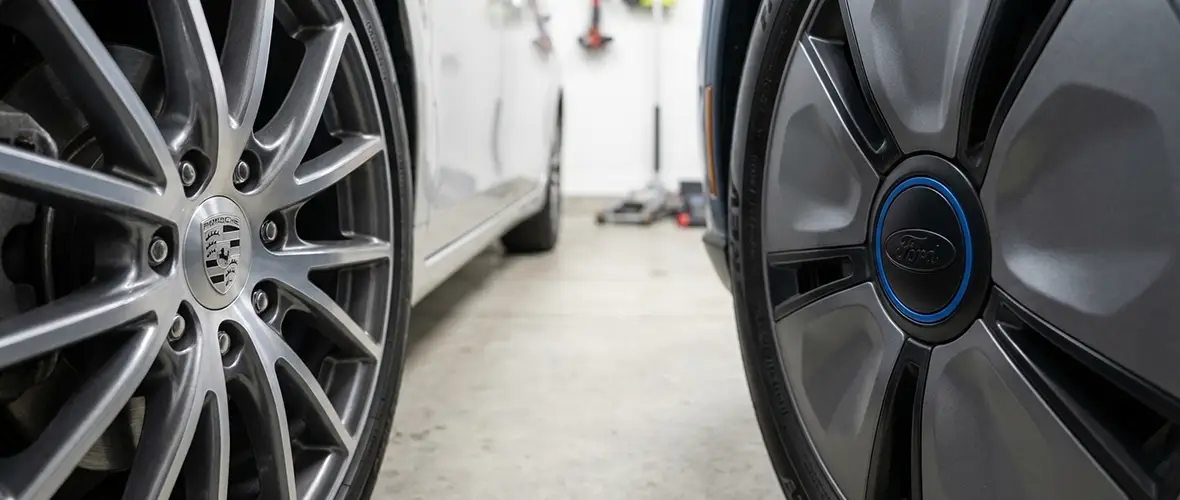
Hybrid vs EV myths are loud, but your wheel emblems usually tell me your real opinion in about two seconds. The clean OEM cap crowd tends to be hybrid people, practical, calm, and allergic to hassle. The blacked out center cap crowd tends to be EV people, techy, efficient, and a little picky in a good way. And the faded crooked cap crowd tends to be “I have opinions, but I do not clean wheels,” which is a whole different problem.
I learned this the dumb way in a parking lot argument that was not even my argument. Two guys were debating “which is better” while I was standing there with my trunk open, holding a towel, because I was about to wipe brake dust off my own caps. Both cars were decent and both powertrains were fine, but both sets of center caps looked tired and mismatched. That was my reminder that identity is not the badge on the hatch, it is the details you actually maintain, starting with the wheels.
A quick note before we start. I am going to use recent sources for the big claims, because grids, batteries, and standards change, and old data creates new myths. I am also going to keep this simple, because nobody needs a research paper to choose a daily driver. If you want the wheel part to be easy, focus on fitment and finish, not hype.
Myth 1: EVs are always cleaner than hybrids, no matter where you live
EVs often have lower life cycle greenhouse gas emissions than gasoline cars, but “always” is where people get sloppy. The electricity you charge with matters, and so does how the car is built and driven, which is why the International Energy Agency uses a life cycle tool instead of one magic number. In Europe, a 2025 ICCT life cycle analysis estimated new battery electric cars have far lower life cycle emissions than gasoline cars, while hybrids and plug in hybrids also cut emissions but less in most cases. Wheel tell, if you love this myth, you usually like modern, minimal wheel badges because you want the clean win with no footnotes.
Reality check you can use today:
Cleaner home charging makes the EV advantage bigger.
No home charging, a hybrid can still cut fuel use with less stress.
Either way, fewer miles and correct tire pressure beat online debates.
Myth 2: Hybrids are pointless because they are just gas cars with extra parts
Hybrids are not pointless, they are a tool for people with real constraints, like apartment living, long commutes, or a job that cannot wait on a charger. In stop and go driving, regen and electric assist can cut fuel use in ways a pure gas car cannot. On the reliability side, Consumer Reports has repeatedly found hybrids tend to score well in reliability surveys, which is why cautious buyers keep picking them. Wheel tell, if you repeat this myth, you usually run the most basic factory look center caps because you want the car to stay simple and “normal.”
Reality check you can use today:
City errands are where hybrids usually shine.
Highway only driving can shrink the payoff, so do the math.
Used hybrids need history, service matters more than the badge.
Myth 3: EV batteries always fail early, so replacement is inevitable
Battery packs do fail sometimes, but “always” is fear talking. Most owners will never replace a pack in normal use, and a lot of the scary stories are edge cases, not everyday ownership. In the U.S., federal rules include minimum battery performance requirements over time, and some states set longer emissions related coverage for the battery or energy storage device, so the system is built around durability rather than quick failure. Wheel tell, if you fear battery failure, you usually pick bright silver or chrome emblems because the “known” look feels safer.
Reality check you can use today:
Keep daily charge in the middle range unless you need full.
Use fast charging when you need it, not as your default.
Shade and cool parking are real battery care, and they cost nothing.
Myth 4: Cold weather makes EVs useless, hybrids do not care
Cold weather range loss is real, and anyone telling you otherwise is selling you something. A U.S. Department of Energy analysis reported large range drops in typical cold conditions, and Consumer Reports testing has also shown meaningful range loss at highway speeds in cold weather. The myth is “useless,” because most of the time the car still works, it just needs planning, and planning annoys people. Wheel tell, if you push the “winter kills EVs” line, your wheels are usually dark, simple, and easy to clean because slush makes everything look dirty anyway.
Reality check you can use today:
Preheat while plugged in, it is the easiest winter hack.
Plan the first stop, then the trip stops feeling scary.
Hybrids also lose efficiency in winter, just less dramatically.
Myth 5: EVs are always cheaper to run, so money makes the decision easy
EV running costs can be great, but it depends on how you charge and what you pay for electricity. Home charging at a decent rate is usually where EVs feel like a cheat code, because you wake up full and skip gas stations. If you rely on expensive public fast charging for most miles, the savings can shrink fast. Consumer Reports has also reported that EVs can cut repair and maintenance costs compared with similar gasoline cars, and that hidden savings is part of why some owners never go back. Wheel tell, if you love this myth, your wheels are usually spotless and your center caps are perfectly aligned because you treat efficiency like a hobby.
Reality check you can use today:
Your charging plan is more important than your opinion.
Maintenance can be lower, but tires still cost real money.
If you cannot charge at home, run numbers before you buy.
Myth 6: EVs catch fire more than gas cars and hybrids
This myth sticks because EV fires look intense on video, and video spreads fast. Fire safety groups point out that high voltage lithium ion battery fires behave differently, including the possibility of re ignition, but that is not the same as “EVs burn more often.” In the U.S., vehicle fires overall are still dominated by conventional vehicles, so the right takeaway is boring, keep recalls and updates current, and do not ignore smells, leaks, or warning lights. Wheel tell, if you repeat the fire myth a lot, you usually choose classic, “trust me” wheel emblems in clean silver because you want predictable everything.
Reality check you can use today:
Keep recall work up to date, whatever you drive.
If you smell fuel or burning plastic, stop and look.
A cluttered garage is a fire risk, not an electric motor.
Myth 7: Hybrids are boring, EVs are slow, and performance is only for gas
People repeat this when they have not driven many modern cars. EV torque is instant, so even a regular one can feel quick at low speed, and that feeling is real. Hybrids vary a lot, some are calm, some use the motor for punch off the line, and some are genuinely fun. Wheel tell, if you believe this myth, you usually pick high contrast on the wheel because you want the car to look fast even when it is parked.
Reality check you can use today:
Test drive before you decide, feel is part of value.
Do not assume “hybrid” means slow, check the trim and tune.
If you care about handling, tires and alignment do most of the work.
Myth 8: Charging is a nightmare, you cannot road trip an EV
Charging can be annoying, but road tripping is not impossible, it is different. The easiest EV life is home charging, because it turns refueling into a sleep habit instead of an errand. For trips, you plan the first stop, then you adapt, and you get used to breaks like a normal human. Wheel tell, if you hate charging on principle, you usually keep your wheels visually quiet, factory look, because you want zero friction and zero attention.
Reality check you can use today:
Home charging decides most of the experience.
If you cannot charge at home, map chargers near your normal routes.
Weather and speed matter, so plan winter trips with extra buffer.
Myth 9: Hybrids are always more reliable than EVs, and EVs always have more problems
Consumer Reports has found hybrids often come out strong in reliability surveys, and EVs have had recurring trouble spots in some years, including charging and battery related systems. At the same time, EVs remove a lot of engine and transmission parts, which can mean fewer routine service items and fewer wear items in normal service. The truth is reliability is model and year specific, not drivetrain magic, so the smart move is to avoid first year models if you want calm ownership. Wheel tell, if reliability is your main obsession, you usually like factory style wheel emblems with perfect fit, because you do not want surprises anywhere.
Reality check you can use today:
If you want low drama, buy proven models, not first year experiments.
EV reliability is often tied to software and charging behavior.
Hybrid reliability is still tied to normal engine maintenance basics.
Myth 10: Wheel emblems do not matter, the drivetrain is the whole identity
This one is the easiest myth to test in one glance. Wheels are what people see when the car is parked, and the center cap is the face of the wheel, so a faded logo makes the whole car look tired. A clean emblem makes the wheel look cared for, and a crooked emblem makes the wheel look cheap, even if the car is expensive. Wheel tell, if you repeat “wheels do not matter,” your caps are usually the most neglected part of your car, and you know it.
Reality check you can use today:
Correct size matters more than fancy design.
Prep matters more than brand name.
Consistency across all four wheels matters more than any myth.
The wheel identity cheat sheet
If you want to skip the drama and match the vibe, here is the simple version. Your wheel badge finish should match how you use the car, not how you wish you used it. If you wash often, you can run glossy domed emblems and keep them looking sharp with quick gentle care. If you drive through winter grime or you rarely wash, darker and simpler finishes hide ugliness better and still look intentional.
Quiet optimizer, OEM style silver or satin, calm and clean.
Tech minimalist, matte black, tight fit, no extra colors.
Torque fan, black plus one accent ring, sporty but controlled.
Winter survivor, darker finish that hides grime, easy wipe surface.
Detail nerd, everything matched, caps and valve caps aligned.
The install rules that make any drivetrain look better
I have seen people debate EV versus hybrid for an hour, then stick an emblem on crooked in ten seconds. Clean the center cap, wipe with isopropyl alcohol, and dry fit the emblem before you commit. Press from the center out, work the edge slowly, and leave it alone to set before harsh wheel cleaner touches it. If you want the clean “factory” look, the step by step wheel emblem size guide will save you from ordering the wrong diameter, and the quick care checklist in How to Maintain & Clean Your Wheel Emblems (Without Ruining Them)? will keep the edges looking fresh.
If you want the simple browsing path, start in Wheel Emblems for factory style looks, then check Domed Emblems if you want more depth and easier wipe downs. If you want the small detail that makes the wheel look finished, look at Valve caps. You do not need a full wheel swap to make the car feel newer, you need the right size and a straight install.
Quick Q&A
Q: Are EVs cleaner than hybrids in real life?
A: Often yes, but the size of the advantage depends on the electricity used for charging and the full life cycle assumptions. Recent tools and studies show EVs tend to have lower life cycle emissions and they improve as grids get cleaner.
Q: How much range do EVs lose in winter?
A: Cold weather can reduce range a lot because battery temperature and cabin heat take energy. Testing shows meaningful drops, and preheating plus planning helps.
Q: Are hybrids always more reliable than EVs?
A: Hybrids often score well in reliability surveys, and EVs have had more trouble spots in some years, especially around charging. It still depends on the model and year, so do not guess.
Q: Is it dumb to buy a hybrid now?
A: Not if it fits your life. If you cannot charge at home or your driving is mixed, a hybrid can be the least annoying way to cut fuel use.
Q: What makes wheel emblems look cheap?
A: Wrong size, crooked alignment, and bad prep. Even a great emblem looks bad if it is off center by a hair.


