


Mercedes Blue Laurel vs. Black Laurel. A Style Guide
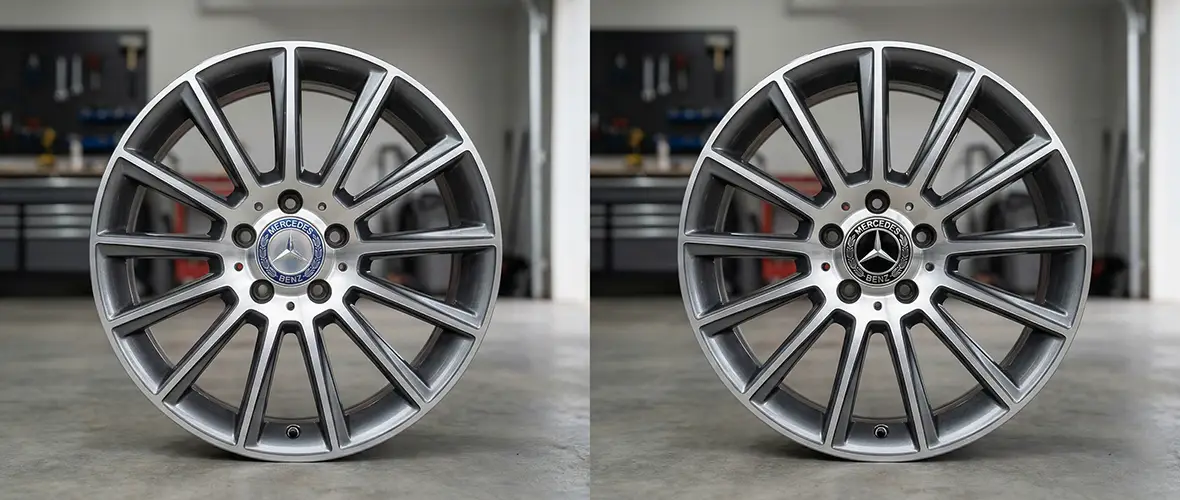
Mercedes laurel wreath badge styling is easy, blue laurel looks classic and bright, black laurel looks modern and stealth, and you pick the winner by matching your wheels. If your wheels and trim are bright, chrome, or silver heavy, blue laurel usually looks like it came that way from the factory. If your wheels and trim lean dark, black laurel usually looks like the correct Night look, even if your car did not come with a Night package. The guide below gives you the rules I use so you do not buy twice for one set of wheels.
Last week I was in a parking lot with a microfiber towel and a guy who looked genuinely upset at four tiny circles of plastic. His car was clean, the paint had that deep shine, and then the center caps were cooked, faded, edges peeling, and one cap was not even the same shade as the others. He had ordered replacements and accidentally bought the opposite style, blue laurel for a car with black trim and dark wheels. We held the new cap up to the wheel and it looked like a bright button stuck in the middle of a stealth build.
That moment is why this choice is less about right or wrong and more about finishing the picture. The laurel wreath is a real Mercedes design cue, not a random pattern, and it comes from the brand’s history. Mercedes Benz Group explains that the laurel wreath came from the Benz symbol and the star came from Daimler, then the two were combined after the merger. If the wreath feels like heritage to you, that is exactly what it is.
Here is the fast answer before we get into the matching rules. Blue laurel pulls your eye to the center and adds color, so it works best when the car already has bright metal and lighter wheel faces. Black laurel tucks the badge into the wheel, so the wheel shape becomes the main thing you notice, and it fits dark wheels and dark trim themes. Mercedes accessories and parts catalogs show the star with laurel wreath hub cap as available in multiple versions, including a black version, so both directions are valid “factory style” lanes.
Blue laurel, what it signals
Blue laurel is the classic look. It adds contrast, and it makes the center cap feel like jewelry instead of an afterthought. It also plays well with older Mercedes design language, because the wreath is tied to Benz racing success and the star and wreath history is part of the brand story. If you want a wheel that feels proper Mercedes, blue is usually the easiest way to get it. Blue laurel tends to look perfect in these situations.
Silver wheels, polished lips, machined faces, or bright two tone spokes
Chrome window trim or bright grille accents that already reflect light
Light paint colors like white, silver, champagne, and light blue
Classic builds where you want the center cap to be a highlight
Older wheel designs where a bright center makes the spokes feel balanced
If your car has a lot of bright metal, blue laurel rarely looks wrong. The main time it looks off is when the rest of the car is full blackout and the center cap becomes the only bright jewelry left. If that is your car, do not fight it, go black and keep it consistent. Consistency always looks more expensive than a random pop of color.
Black laurel, what it signals
Black laurel is the modern look. It makes the wheel read bigger because your eye is not stuck on a bright center, it follows the spokes and the barrel instead. It also hides dirt better, and that matters when brake dust shows up right after you wash. Official Mercedes parts and accessories listings describe star and laurel hub caps as available in multiple versions, and black is one of them. Black laurel tends to look perfect in these situations.
Gloss black, satin black, or dark gray wheels
Dark exterior trim, smoked lights, or blackout grille themes
Modern builds where you want the wheel design to lead the look
Cars with a lot of black accents, where blue would feel out of place
Owners who want less visible brake dust on the wheel center
If your car already leans dark, black laurel usually makes it look intentional. The common mistake is mixing finishes, like a glossy emblem on a satin wheel, or a satin emblem on a glossy wheel. If you fix that one detail, the rest gets easy. Black can be the safer choice for a daily driver because it blends with more wheel designs.
The rule that beats every argument, match finish first
People get trapped in the color debate and miss the bigger issue, finish. A glossy badge on a satin wheel looks like a wet coin in the center, and a satin badge on a glossy wheel looks dusty, even if it is brand new. Finish matching is the first step and color is the second step, so match gloss to gloss and satin to satin, then pick blue or black. Your eye forgives a lot, but it does not forgive a finish mismatch. Use these pairings as your cheat sheet.
Gloss black wheel, gloss black laurel, bright star stays crisp
Satin black wheel, satin black laurel, star still reads as the highlight
Dark gray wheel, black laurel works, blue works only if the wheel has bright faces
Silver wheel, blue laurel almost always works, black works when the car has heavy black trim
Two tone wheel, match the laurel to the darker sections, let the bright faces add contrast
If you keep finish consistent, the wheel looks factory from far away. When the finish is wrong, the wheel looks like it is wearing somebody else’s badge. That is why I always decide the finish family first, then I decide the laurel color. If you want more finish examples while you compare photos, keep this guide open: Gloss Black vs. Matte Black. Matching Your Rims.
The quick trim test, the squint check
Stand ten steps back, squint a little, and ask yourself what the car reads as, bright and shiny, or dark and stealth. If you see bright lines first, chrome trim, silver details, shiny wheel faces, then blue laurel fits the theme. If you see dark shapes first, black trim, dark wheels, smoked bits, then black laurel fits the theme. When the trim theme is mixed, let the wheel finish decide, because wheels dominate the look at a glance. Do this in two minutes and you stop guessing.
Park the car in normal daylight, not in a dark garage.
Look at the whole side profile for five seconds.
Decide if the car reads bright or dark.
Pick the laurel that matches that read.
If you still cannot decide, match the wheel finish and move on.
Do the squint check on both sides of the car, because one side can be in shadow and mess with your judgment. If you are on the fence, take a photo and look at it on your phone, it flattens the scene and makes the trim theme obvious. Then commit and keep all four corners the same. Your wheels will look intentional even before you clean them.
Fit matters more than style, measure before you buy
I have seen people nail the perfect color choice and still ruin the look with the wrong size. A badge that is too small makes the wheel look unfinished, and a badge that is too big looks like a cheap sticker that got stretched. Before you buy caps or emblems, measure the flat circle where the emblem sits, not the full cap. Mercedes wheels can vary across trims and wheel styles, so you cannot assume your friend’s size matches yours. Here is the quick measuring routine I use.
Pop one center cap out and clean the face so you can measure cleanly
Measure the flat emblem area in millimeters, not the whole cap
Check if the face is flat or slightly curved, because that changes what material sits well
Confirm you have four matching caps, because mixing cap styles ruins the set
Take a photo of the wheel, because it helps you compare finish when you shop
If you do not want to risk clips or part number confusion, stickers become the easy path. I use stickers when the cap fits fine and only the logo looks tired, which is the most common situation. It is also faster than waiting on parts and hoping the shade matches. And you keep the factory fit that already works.
Why I often keep the original cap and refresh the face
Most replacement center caps online are a gamble. You can get the wrong clip depth, the wrong diameter, or a finish that does not match the other three corners. When the original cap still fits tight, I prefer to keep it and refresh the emblem area. That is where a proper domed wheel emblem sticker shines, because you update the look while keeping factory fit. Done right, it looks like a new cap without the parts lottery.
This is where the product choice matters. HubCapStickers describes a domed resin coating and UV protection on its Mercedes emblem product pages, which is exactly what you want for a wheel that lives in sun, heat, and washing. That dome gives the emblem depth, and it protects the print so the color stays sharp instead of chalky. If you want to browse, start with the sticker collection and filter by brand and size.
How I install a wheel emblem so it stays put
Install is not complicated, but you cannot do it on a dirty cap and expect it to stay perfect. Wheels live in heat, water, salt, and brake dust, so adhesion is all about surface prep and calm alignment. If you follow the order below, you avoid the usual edge lift problem and you get a clean, centered badge. Most install failures come from touching the adhesive after the alcohol wipe, or washing too soon. For the longer checklist and the little timing details, use How to Prep Wheels So Stickers Never Fall Off and follow it once.
Wash the center cap with normal car wash soap, rinse well, and dry it fully.
Clean grooves with a soft brush so you do not leave dirt rings around the emblem area.
Wipe the emblem area with isopropyl alcohol, then let it dry, do not touch it again.
Test align the emblem using a spoke or valve stem as your visual level.
Peel and place once, then press from center outward with steady pressure.
Let it sit at least 24 hours before a wash, longer if it is cold outside.
What to buy from HubCapStickers for each look
If you want the blue laurel vibe, you are chasing contrast and a clean classic center that reads bright. If you want the black laurel vibe, you are chasing unity and a stealth center that matches your dark trim and wheel finish. Either way, start by confirming size and finish, then choose the emblem style that matches your theme. When you shop in that order, you stop guessing and you stop wasting money.
For a center refresh that keeps your factory cap, use the Mercedes sticker on rims custom epoxy edition and match the finish family you already have. For a small matching detail that makes the wheel area feel complete, add a set of tire valve stem caps for cars modern look or browse the full valve caps collection. Start with the center, then add accents.
FAQ
Q: Do Mercedes laurel wreath center caps mean my car is a classic model?
A: Not by themselves. The laurel wreath is a heritage design element tied to the Benz side of the brand and it shows up across different eras. Today it is also an accessory style choice, so you will see it on older wheels and on newer builds too.
Q: Will a black laurel look wrong on silver wheels?
A: It can if the rest of the car is bright and chrome heavy. If your car has strong black trim and dark accents, black laurel can look sharp on silver wheels. If your trim is mostly bright, blue laurel usually looks more natural.
Q: Does blue fade faster than black?
A: Fade is about UV exposure and material quality, not the color name. A domed emblem with UV protection will hold color far better than a thin flat print. Prep and curing time also matter more than the shade.
Q: Can I mix blue laurel on the front and black laurel on the rear?
A: Do not. Wheels are read as a set, and mixed centers look like you lost a cap and guessed. Keep all four corners consistent.
Q: Do I need to remove the center cap to apply a sticker?
A: You can apply on the wheel if you have room, but pulling the cap lets you clean it properly and align it without stress. Most caps pop out safely with the right tool and patience. The calmer you are, the straighter the badge ends up.
Q: How long should I wait before washing after install?
A: Give it at least 24 hours. Early washing is one of the fastest ways to lift an edge and trap dirt. If it is cold outside, give it extra time so the adhesive can bond hard.


