


Range, Regen & Rims: How EV Driving Style Shows Up on Your Wheels
EV wheel care is the honest mirror of how you drive, because range habits, regen braking, and curb kisses all show up on your rims. If you want the short answer to the title, your wheels rat you out through brake dust patterns, tire wear, and the scuffs your aero covers collect. I see it every time I walk past a row of EVs at a charger, some look crisp, some look like they got dragged behind a truck. Same parking lot, same weather, totally different wheel story.
The first time it really hit me, I was wiping down a friend’s Model 3 while he bragged about “one pedal life.” The paint was clean, the glass was clean, the interior smelled like new shoes, but the wheels had this dull gray film that would not rinse off. He swore he washed the car every week, and I believed him, because the body looked great. The wheels just had their own problems, and those problems came from how and where he drives.
Here are the three fastest tells I look for, even before I notice the badge on the hood.
- Dust pattern on the spokes and around the barrel
- Tire shoulders that look chewed, feathered, or shiny
- Edge damage, chips, or rash near the rim lip
Learn to read those three, and you can figure out the driving style, the wheel setup, and what cosmetic upgrades will actually stay nice.
Regen braking makes wheels look cleaner, but it can hide other problems
Regen braking wheels can look weirdly clean compared to a gas car, and that’s not magic, it’s physics. When the motor does more of the slowing, the friction brakes do less work, which means less brake wear and less brake dust in normal driving. Research on brake wear particles shows regenerative braking can cut brake wear a lot, and it also shows driving style changes the result, especially when people do short, hard stops that force the friction brakes to jump in.
But there’s a catch, and it shows up on the rotor face, not the spokes. If you barely use the friction brakes, moisture sits on the rotors and the pads don’t sweep them clean as often. That can lead to rust, glazing, and uneven spots that make the brakes feel grabby when you finally need them. Service and maintenance guides keep warning EV owners about corrosion and uneven wear from low brake use, so “less dust” does not mean “no brake care.”
If you want the clean look without the hidden brake drama, do this habit once a week, especially if you live where it rains or snows.
- Find a safe empty road with good visibility.
- Turn regen down a notch if your car lets you.
- Do a few firm stops using the brake pedal, not panic stops, just real stops.
- Drive a minute and let things cool down.
That little routine keeps the rotor faces cleaner, and it also keeps the inside of your wheels from building a crusty ring that turns into a permanent gray halo.
Range chasing changes what hits your wheels
Range is not just a number on the dash, it’s a set of choices you repeat every day. If you roll into regen early, keep your speed smooth, and avoid hard cornering, your wheels usually stay cleaner and your tires wear more evenly. If you drive like every green light is a personal challenge, your tires will tell on you fast. And if you do a lot of highway miles, your wheels collect a different type of grime, more tar, more tiny stones, and more road film baked on by heat.
This is where people get confused about EVs and tire wear. EVs are often heavier than similar gas cars, and they also deliver torque instantly, so tires can wear faster when the right foot gets spicy. A 2025 report on non exhaust emissions highlights the trade, EVs can have much lower brake emissions due to regenerative braking, but heavier weight can increase tire and road wear, and it even gives a concrete example of higher tire and road wear with heavier vehicles.
You do not need a lab to see it, you can see it in the tread blocks. You can also see it when one shoulder looks scrubbed, or when the inside edge looks like it’s been quietly eaten. If you ever want a simple “am I doing okay” check, do it with a flashlight and your hand. Run your palm lightly across the tread and feel for a sawtooth edge, because that’s often the first sign your alignment or driving style is chewing the tire.
Here’s the quick read I use when I’m helping someone figure out what changed.
- Smooth tread, even wear, clean sidewalls usually means calm driving and decent alignment
- Feathering or sawtooth edges often means toe is off, or you corner hard all the time
- Chewed shoulders can mean low pressure, heavy loads, or a lot of fast turns
- Shiny, scrubbed tire letters can mean you’re kissing curbs in parking lots
If you want to keep tires and wheels looking fresh, the boring stuff matters more than the fancy stuff.
- Check tire pressure when the tires are cold.
- Rotate tires on schedule, even if the tread looks fine at a glance.
- Get an alignment check after a hard pothole hit or if the steering wheel is off center.
- Rinse road salt off quickly, because salt is basically wheel cancer.
Aero covers are not ugly on purpose, they are there to cut drag
Aero wheel covers ev owners love to hate exist for one simple reason, wheels are messy in the wind. Spinning spokes stir air like a blender, and that drag costs energy, especially at higher speed. That’s why you see smooth covers, flatter faces, and tight wheel openings on so many electric cars now. If you drive a lot of highway, those details matter more than most people want to admit.
There are real tests showing range gains from aero covers at speed. Next move tested Tesla Aero caps and reported about a three percent reduction in energy use at Autobahn speed, which translates to a small but real range bump. Technical work on aerodynamic wheel covers also points out that covers can reduce wheel related aero losses by reducing wheel drag and changing airflow around the wheel.
Now here’s the part that matters for your wheels, aero covers also change where grime collects. They trap dirt behind them, they hide the barrel, and they can rub in one spot if a clip loosens. If you never pop them off, the wheels can look clean from five feet away, then nasty up close when you finally remove the cover and see what’s living behind it.
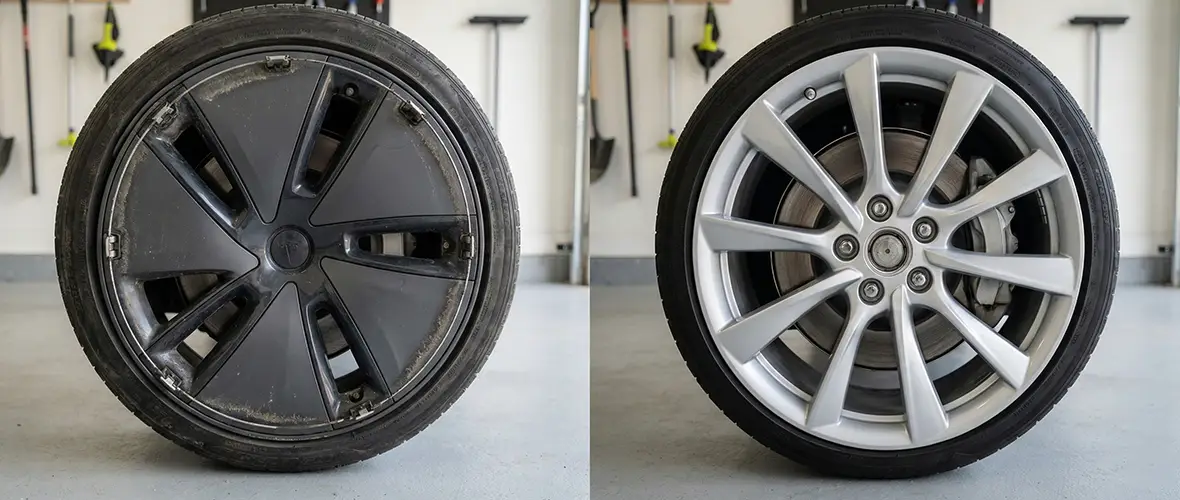
If you run aero covers, steal this routine and you’ll avoid the gross surprise later.
- Pop the covers off every month or two.
- Rinse the wheel barrel and the back side of the cover.
- Check clips for cracks and make sure nothing is rubbing.
- Reinstall carefully so the cover sits flat and does not wobble.
That one habit also helps your center caps and emblems last longer, because grit behind a slightly loose cover acts like sandpaper when it moves.
Your wheel finish tells me how you wash the car
I can usually tell who uses a harsh wheel acid, who uses a brush that should be illegal, and who never rinses after a winter drive. Gloss black wheels show swirls and chips fast, matte wheels stain if you use the wrong cleaner, and machined faces get cloudy when harsh chemicals sit too long. EVs don’t avoid this, they just change what kind of dirt is common. Less brake dust does not mean “easy mode,” because road film still bakes on, especially around aero covers and tight spokes.
If you want a wheel cleaning plan that does not feel like a part time job, use a simple ladder. Think of it like teeth, quick rinse often, real clean sometimes, and a deeper reset a few times a year. The key is consistency, because baked grime is what turns five minutes into an hour. And the center cap area matters as much as the spokes, because it’s the spot people stare at first.
Here’s the ladder I use on my own cars.
- Weekly quick rinse, especially after salted roads or wet highways.
- Monthly proper wash with a soft wheel brush and a mild cleaner.
- Seasonal reset, remove tar spots, clean the barrel, and add a wheel safe protectant.
The small parts get destroyed first, center caps and valve caps
Durable wheel emblems are not just a style choice on EVs, they’re a survival choice. Wheels take heat cycles, pressure wash hits, road salt, and tiny rock chips, and the center cap is a little flat bullseye that takes the abuse. It also gets attacked by your own cleaning habits, because people scrub that area hard when the logo looks dull. If you’ve ever wondered why the wheels look “tired” even after a wash, it’s usually the center cap and the little details.
This is why I like using the right type of emblem instead of a random cheap sticker. A quality domed emblem has a clear resin layer that helps with UV and gives you that “wet look” depth. A thinner flat decal can look great too, but it needs good material and proper prep or it will lift at the edge after a few washes. If you want the quick comparison before you pick, Domed vs. flat wheel stickers is the simplest way to choose without overthinking it.
When you’re shopping, start in the right place, then narrow down based on your wheel setup.
- Browse Wheel Emblems for the clean OEM look and lots of sizes.
- Browse Domed Emblems for that glossy 3D finish that pops in photos.
- Browse Valve caps for the quickest upgrade that still makes the wheel feel “finished.”
If you drive a lot, wash a lot, and live in harsh weather, go one step up on durability. The extra few euros hurts less than peeling a lifting emblem off in the cold with numb fingers.
The EV wheel care checklist I hand to friends
I keep a simple checklist for first time EV owners because people get obsessed with charging and forget the wheels exist. Then three months later they ask why the tires look weird and the caps look faded. This list saves that whole cycle, and it’s not fancy, it’s just the stuff that actually works. The goal is to keep wear even and keep grime from baking in.
Here’s the list, and yes, it’s boring on purpose.
- Check tire pressure weekly for the first month, then at least twice a month after that
- Rinse wheels after any salty road drive, even if you do nothing else
- Do a few real brake pedal stops each week to keep rotors clean
- Remove aero covers sometimes, because dirt hides behind them
- Avoid blasting high pressure spray directly at the edge of an emblem
Do those five things and your wheels stay cleaner, your tires last longer, and your center caps won’t look like a forgotten kitchen appliance.
Picking emblems that match how you actually drive
This is where most people mess up, they pick a style that looks great in a photo, but doesn’t fit their daily life. If you park on the street, drive through winter slush, and hit automatic washes, you need something that can take abuse. If your EV is a weekend toy and you hand wash it like a ritual, you can get away with more delicate looks. The goal is not to impress a stranger online, it’s to keep the wheels looking good in your real routine.
Here’s how I match emblem choice to driver type.
- High mileage commuter, pick a domed emblem with a solid clear layer and simple color layout
- City parker, pick a design that hides tiny scuffs, darker centers help a lot
- Highway range chaser, keep it clean and minimal, it matches the aero vibe
- Snow belt driver, prioritize strong adhesive and proper cure time, not just the look
If you want a simple option that works for almost everybody, a clean custom set like wheel badges custom design lets you pick the look without playing guessing games with weird finishes. It’s also an easy way to match a minimalist EV style without going full blackout and losing the brand identity. The cleaner the design, the longer it tends to look “right,” even when the wheel gets dirty.
And don’t ignore valve caps, because they’re small but they sit right where your eyes go when you crouch to check pressure. A solid set like wheel valve caps SUVs luxury style also helps keep grit out of the valve stem area. That matters more than people think if you drive in dust, salt, or messy winter slush. It’s a small part that stops a small problem from becoming an annoying one.
Installation is where most people lose the game
Weatherproof hubcap stickers only stay weatherproof if you install them like you mean it. Most failures I see are not material failures, they’re human failures, which is good news because you can fix that. You do not need special tools, you need a clean surface and a little patience. If you rush it, you get crooked logos, lifted edges, and that one bubble that will stare at you forever.
This is the basic flow I use on almost every center cap install.
- Wash the wheel and center cap with mild soap and water.
- Dry it fully, then wipe the cap with isopropyl alcohol.
- Test fit the emblem and pick your alignment reference, I use the valve stem or a spoke.
- Place lightly first, then press from center out with steady pressure.
- Let it cure before washing, at least a full day, longer if it’s cold.
If you want the full step list with the little mistakes people make, Installing hubcap stickers like a pro is the guide I send when someone texts me a blurry photo and asks, “Is this straight?” It’s also the easiest way to avoid the classic move where you touch the adhesive with oily fingers and wonder why the edge won’t stay down. Clean hands, clean cap, patient press, that’s the whole game. Once it’s cured, it holds up way better to normal washing.
What your wheels say about your EV driving style
You can tell a lot from wheels, and once you see it, you can’t unsee it. There are a few EV driver types I spot all the time, and each one leaves a different wheel signature. None of this is about judging, it’s about matching care and upgrades to reality. Your EV is quiet, but your wheels are loud.
Here are four common profiles, and what I tell each one.
- The one pedal hero, clean spokes, rusty looking rotors after rain, lots of aero covers
- The range accountant, even tire wear, spotless center caps, covers never come off
- The stoplight sprinter, rear tires wear faster, more rubber dust, more cleaning needed
- The winter survivor, salt film, pitted finish, faded caps, valve area gets grimy
If you know which one is you, the fix is simple. One pedal heroes need occasional brake pedal stops and monthly cover checks, because hidden grime builds up. Range accountants need the same thing, but they also need to stop pretending the wheels clean themselves. Stoplight sprinters need earlier tire rotation and a tougher emblem choice, because they wash harder and more often. Winter survivors need frequent rinses and thicker, better cured upgrades, because salt never sleeps.
Quick Q and A
Q: Do regen braking wheels always stay cleaner than gas car wheels?
A: They often show less brake dust because the friction brakes work less, but they still collect road film and rubber dust. If you never use the brake pedal, the rotors can rust and the braking feel can get weird.
Q: Do aero wheel covers EV owners use really help range?
A: Yes, especially at higher speeds, because smoothing the wheel face can cut drag. Third party tests have reported around a three percent efficiency gain in certain conditions.
Q: Why do EV tires sometimes wear faster?
A: EVs can be heavier and they deliver torque instantly, so driving style and tire pressure matter more than people expect. Reports on non exhaust emissions also highlight that heavier vehicles can increase tire and road wear even as brake emissions drop with regen.
Q: Can I put wheel emblems on plastic aero covers?
A: Yes if the surface is smooth, clean, and you let the adhesive cure before washing. Avoid placing a sticker on a spot that flexes or rubs when the cover clips in.
Q: How long should I wait before washing after installing a center cap emblem?
A: Give it at least 24 hours, longer if it’s cold out, so the adhesive bonds properly. A fully cured emblem handles normal washing much better than one you rushed.
Q: What is the fastest way to make EV wheels look newer?
A: Clean the barrels, refresh the center caps, and add a matching set of emblems and valve caps. The center area is what people lock onto first, so fixing that makes the whole wheel look newer in one move.


