


Silicone vs. Epoxy: The Science of Weatherproof Stickers
Car stickers stay weatherproof on wheels when the clear dome can flex with heat, stay clear in sun, and keep the edge sealed, and that is why silicone beats epoxy for most center caps. I have tested enough weatherproof wheel decals to know the wheel is the harshest place you can stick a logo on a car. Epoxy looks amazing on day one, but it is rigid, and wheels punish rigid things. If you want the best material for wheel center cap stickers, match the dome to how your wheel cap moves.
I learned this after I “saved money” on a set of domed badges and paid for it with embarrassment. The install looked perfect, the logos were level, and I did that little head nod like I had just solved life. Two months later one edge lifted, brake dust packed under it, and the badge went from glossy to grimy overnight. I did not lose the whole sticker, I lost the clean edge, and that was enough to make the wheel look tired.
After that I started looking at failures like a detective with dirty hands. Most bad wheel decals fail right at the edge, because the edge is where water and grit can sneak in. Some fail because the adhesive never bit the plastic, which is an install problem, not a dome problem. But the ones that crack or lift even with good prep often have a rigid dome fighting a flexible cap.
Why wheels destroy stickers that survive on everything else
A wheel is not a calm surface like a door panel, it is heat, grit, and chemicals on repeat. The cap warms up from brakes, then cools fast, then warms again, all day. Water hits it at speed, then rotation pushes that water toward seams. Dirt acts like sand, and sand loves edges.
Here is what your wheel center deals with during normal driving:
Brake heat that warms the cap, then a fast cool down after stops
Fine brake dust that sticks, then grinds when it gets wet
Sunlight that bakes clear coatings for hours while the car is parked
Winter salt spray that crawls into tiny gaps at the edge
If a sticker fails on a wheel, it is rarely random. The material could not take the heat cycle, the edge seal opened up, or the surface was not clean when you stuck it down. Fix those three and the same sticker that used to fail in months can last for years. Wheels are brutal, but they are consistent.
Silicone vs epoxy in plain English
Think of the dome layer as a clear helmet over the logo. A silicone dome is a flexible helmet, like a tough rubber lens that bends and rebounds. An epoxy dome is a hard helmet, like a smooth candy shell that shines hard but does not like bending. Both can look premium, but only one keeps its edge calm when the cap expands and shrinks.
Here is the quick comparison I tell people who do not want a chemistry lecture:
Silicone dome feels slightly soft, it flexes with plastic caps and vibration
Epoxy dome feels hard and glassy, it stays crisp on rigid surfaces
Silicone keeps the edge pressed down longer on daily driven wheels
Epoxy shows edge stress sooner when heat cycles are strong
That is the whole story in four lines. The rest is just me helping you pick the right one, then install it so it stays put. Most buyers get the dome right and still lose because they rush the prep. If you remember one rule, pick flex first and gloss second.
Silicone domes, why they stay sealed longer
Silicone lasts on wheels because it stays flexible across hot and cold. When a plastic cap grows a bit in heat, silicone can move with it instead of fighting it. That means less stress at the edge, which is where peeling starts. Silicone also tends to stay clearer under sun exposure, so the logo does not look foggy after a season.
Here is what I see silicone do well on real daily drivers:
Holds a tight edge seal longer on thin plastic center caps
Handles repeated heat and cool cycles without turning brittle
Resists road salt spray and common wash chemicals
Silicone is not magic, it can still get scratched if you attack it with a stiff brush. But wheels do not usually die from scratches, they die from edge lift and cracking. Silicone is built to avoid those two problems. That is why it is my default recommendation.
Epoxy domes, what they do well and why they can fail
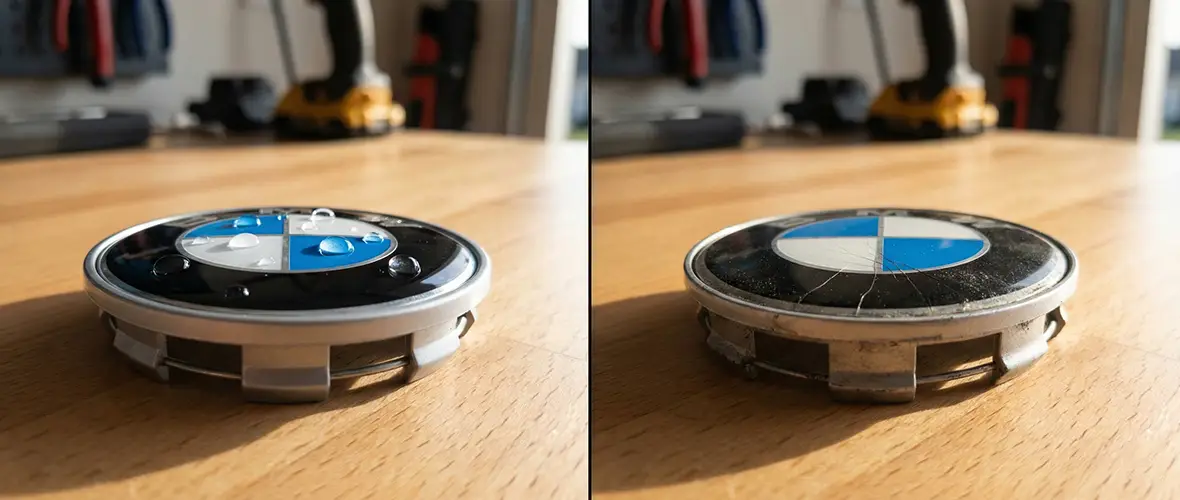
Epoxy has a strong pull because the gloss is deep and the dome looks like a tiny clear coated emblem. On rigid items that do not flex, epoxy can stay nice for a long time. The problem is most center caps are plastic, and plastic moves with heat. Epoxy is rigid, so stress builds at the border.
Here are the warning signs that an epoxy dome is getting tired:
Hairline cracks that show under bright side light
A cloudy patch that makes part of the logo look dull
A sharp edge lift that catches dust and turns the border dark
If you have thick rigid caps and you wash gently, epoxy can still be a valid choice. If your caps flex and you drive in real weather, epoxy is the one that complains first. The edge tells the truth, always. That is why I ask about cap stiffness before I talk about shine.
The real enemy is water at the edge
People worry about water sitting on top of the dome, but that is not the threat. The threat is water getting under the edge and bringing grit with it. Once grit is under the edge, every rotation is like sanding the adhesive line. A flexible dome helps keep the border pressed down even after months of vibration.
Most edge failures follow the same chain:
A tiny gap forms at the border, from flex stress or a rushed install.
Dust sticks to that gap, because wheel dust sticks to everything.
Water hits the dust, turns it into gritty paste, and the paste holds moisture.
Salt and soap creep in, and the adhesive weakens right where it matters.
Stop that chain and you win. Let it start and you spend your time picking at a peeling edge with your fingernail. I have done that, it is not a hobby. The fix is picking the right dome and installing it like you care.
Quick garage tests to tell silicone from epoxy
If you are holding a domed sticker and you cannot tell what it is, use your fingertips. I do this when someone asks me to match an old badge. The goal is to avoid buying the wrong dome again, not to impress anyone. These tests take ten seconds and they work well enough for real life.
Try this:
Press the dome near the edge with a fingernail, silicone gives and rebounds
Pinch the edge gently, silicone flexes, epoxy feels stiff and sharp
Tilt it under bright side light, epoxy cracks show as tiny lines
If your cap itself feels thin or flexible, you already have your answer. Pick the dome that can flex with it. That choice alone solves most “why did my sticker fail” stories. After that, it is all prep.
How I choose the best material for wheel center cap stickers
When someone asks me for the best material for wheel center cap stickers, I ask how the car is used. Daily drivers see heat cycles, rain, salt, and quick washes, so I prioritize flex and edge sealing. Weekend cars see less abuse and the owner usually washes carefully, so high gloss can be the priority. Your goal decides your material, not the other way around.
Pick silicone domed stickers if you check any of these boxes:
Hot summers and cold winters where you live
Frequent driving that warms the brakes often
Plastic caps that flex when you press them
Pick epoxy domed stickers if your setup is more like this:
Thick rigid caps, often on some aftermarket wheels
The car is driven less and stored more
You want a very hard surface feel and a crisp glossy look
Most people fall into the silicone list even if they do not want to admit it. That is why silicone is the safer call for weatherproof wheel decals on real street cars. It keeps the edge sealed longer, and that is what keeps the badge looking clean. The gloss you see on day one matters less than the edge you see later.
Install steps that matter more than the dome
I have seen premium stickers fail because someone stuck them onto a cap that still had tire shine on it. I have also seen basic stickers last far longer than expected because the prep was strict and the cure time was respected. Adhesive needs clean plastic to grab, and wheels are covered in invisible film. If you skip prep, you are asking glue to stick to grease, and that never ends well.
Here is the routine I use, every single time:
Wash the cap with dish soap and warm water, then dry it fully.
Wipe the face with isopropyl alcohol using a clean lint free cloth.
Let it air dry, then do not touch the face with your fingers.
Test fit the sticker before peeling, so alignment is planned.
Peel, place, and press from the center outward to push out air.
Press the edge all the way around, then hold pressure for 30 seconds.
Let it cure a full day before washing or getting it soaked.
If you want the longer walkthrough, use What Are Wheel Emblem Stickers and How Do They Work as your checklist and follow it like a recipe. Your hands can be messy, but your prep cannot. This is where most people mess up. Take five extra minutes up front and you stop redoing the job.
Wash habits that keep stickers looking new
Your wash routine can shorten sticker life faster than weather ever will. The edge is the weak spot, so anything that attacks edges is the enemy. Strong degreasers every week, stiff brushes, and close range pressure washing all target the border. You do not need to baby the car, you just need to stop doing the exact things that peel decals early.
Here is what I do instead:
Rinse first, because scrubbing dry dust grinds sand into the edge
Use mild soap most of the time, save strong cleaners for serious grime
Avoid blasting water at the edge from close range, back up and use a wider spray
Do those three things and you get more life from any dome material. Ignore them and even a great sticker will look tired early. Wheels punish bad habits consistently. The good news is you can change habits in one wash.
Where to shop without getting lost
If you want to browse options, start in the Stickers section because it shows the main wheel sticker styles and sizes in one place. For classic center cap looks, Wheel Emblems is the cleanest way to filter by brand and diameter, then pick a finish you like. If you want larger badge style pieces beyond caps, Domed Emblems is where those shapes live. For a silicone dome example, compare a product like the Bentley Silicone Sticker with a harder look such as Wheel Stickers Logo High Quality Epoxy Edition.
If you want style inspiration, read Make a Statement: Mercedes Benz Wheel Emblems and More and then come back and choose based on your climate and cap stiffness. The goal is not just a cool logo, it is a logo that still looks cool after months of heat and grime. Pick the material, then do the prep, then forget about it. That is the best outcome.
What I would do if you handed me your keys today
If you drive the car often and you want the badge to keep looking clean, I would choose a flexible silicone dome and focus on prep and cure time. It is the safer material for real weather and real wash routines, and it tolerates the small movement that center caps do all the time. If your car is a weekend toy with thick rigid caps, epoxy can give you that crisp hard shine that looks like a mini clear coat. Either way, the real win is a sealed edge, because that is what keeps water and grit out.
Wheels are the hardest place to keep anything looking new, so a small upgrade there has an outsized effect. When the center looks sharp, the spokes look sharper, and the whole wheel reads as maintained. That is why this material choice matters, it shows up every time you walk up to the car. Do it once, do it right, and you stop thinking about it.
Quick Q&A
Q: Are silicone domed car stickers waterproof on wheels?
A: Clean with alcohol, press the border down firmly, and let it cure a full day.
Q: Why do epoxy domes crack on some center caps?
A: Epoxy is rigid, so flex plus heat cycles can create hairline cracks at the edge.
Q: What is the best material for wheel center cap stickers in winter?
A: A flexible silicone dome holds up best through cold shrink, salt spray, and wet roads.
Q: Do weatherproof wheel decals survive automatic car washes?
A: Yes, if they cured before the first wash and you do not blast the edge from close range.
Q: Can I put a new sticker on top of an old sticker?
A: No, remove the old sticker and residue first so the new adhesive bonds to clean plastic.


